
A children's hospital trained community hires to treat depression. We measured every step.
A leading US children's hospital wanted more people who could deliver evidence-based care to young patients with depression. Since November 2024, ExS has trained, supervised and measured two cohorts of Qualified Behavioral Health Specialists, most of whom had no prior mental-health experience.
At a glance
- Patients onboarded
- 206
- Specialists trained, in 2 cohorts
- 8
- PHQ-9 depression measurements
- 758
- Supervised session reviews
- 454
Data from the pilot's research dataset, 1 September 2026. No patient identifiers.
The challenge
Demand for child and adolescent mental health care far outstrips the number of licensed clinicians. The hospital wanted to know whether people without clinical training could be prepared to deliver a structured, evidence-based treatment safely, and how anyone would know whether they were doing it well.
What we did
Each specialist moved through five stages. Every stage produced a score that fed the next.

Depression with fatigue, stress and trouble concentrating. A former basketball player who has withdrawn from friends and practice. Referred by his school counsellor.
Specialists practise linking activity to mood, building a realistic activity schedule and working through low motivation, before meeting real patients.
Synthetic persona from the ExS persona library. Not a real patient.
How we measured it
We measured the providers and the patients, separately and continuously.
Providers
- Video scenario assessment: 7 scenarios, 12 interpersonal domains
- Measurement-based supervision: 20-item skills rubric, scored by peers, supervisors, the provider and ExS experts
- Competency role-plays: 5 role-plays at basic and advanced levels
- Knowledge test before and after training
- Job satisfaction and burnout, roughly quarterly
Patients
- PHQ-9 (depression) at every session
- GAD-7 (anxiety) at every session
- PSC-17 (parent-reported, at intake and end)
- CSQ-8 (satisfaction with care, at end of treatment)
Sessions ran about every two weeks (median 13 days). All measures are validated instruments or published rubrics.
What we found
All eight specialists completed the end-of-training competency assessment, scoring 24 or 25 of 25 on basic helping skills.
Two in three of 454 session reviews came from peers.
454 sessions were scored by four kinds of reviewer. Two in three reviews came from peers, so the cohort learned to assess each other.
Supervision reviews, Dec 2024 to Aug 2026. Pilot dataset, 1 September 2026.
In an early test, the automated scenario ranking placed six specialists in the same order as expert human raters, with one tie.
Early result · to approvePlaceholder: Nov 2025 figures, 31 patients. To be replaced with the refresh on the September 2026 data.
104 patients stayed for three sessions or more, the point at which outcomes are measured.
Most patients who start stay to session 3. Of the 86 who reach session 5, fewer than half (38) reach session 10.
Patients with at least one measured session (136). Longest course: 19 sessions. Pilot dataset, 1 September 2026.
What happened next
After the first cohort was credentialed, the hospital added sites and hired a second cohort of four in September 2025. ExS and the hospital are now preparing a formal research protocol on the pilot data.
In their words
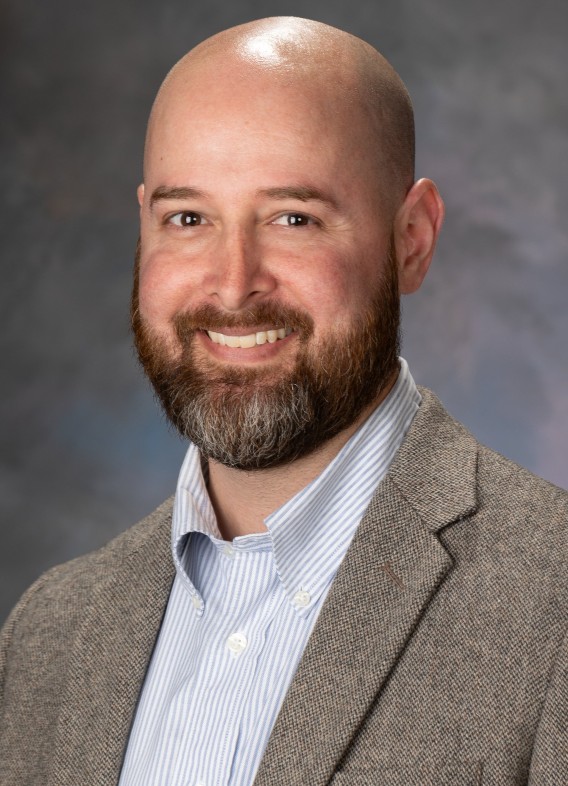
Empower at Scale has significantly expanded the capacity of our mental health team. This fusion of technology and human care has fundamentally transformed my approach to workforce capability.
Method note
Figures are from the pilot dataset as synced on 1 September 2026. One specialist who left early is excluded from specialist-level figures. Practice patients used in training are excluded. Patient outcomes are for patients with at least three sessions and a baseline PHQ-9 above zero. No patient or provider is identifiable on this page.
Run a pilot with your providers.
We set up the same training, supervision and measurement for your team, and report results on your data.